Hair loss is not just a cosmetic issue; it is often a message from the body indicating that something is wrong. Finding solutions for hair loss in women begins with understanding the underlying cause, as a treatment that works for one woman may not work for another. The most common mistake is rushing to buy products without a proper diagnosis.
At the First Specialist Medical Clinics Complex, the dermatology clinic offers a comprehensive evaluation of each individual case, from analyzing the underlying causes to developing a customized treatment plan. The goal is not only to stop hair loss but also to restore scalp health and hair density sustainably.
Causes of severe hair loss in women
People often overlook the fact that hair loss in women is rarely caused by a single factor. More often than not, several factors combine to produce this distressing result. Here are the most prominent medically documented causes:
- Hormonal imbalances: Changes in estrogen and progesterone hormones, especially after childbirth or during menopause, weaken the hair growth cycle.
- Iron and ferritin deficiency: one of the most underestimated causes, and ferritin deficiency in particular gradually reduces the diameter of the hair shaft before it falls out.
- Thyroid disorders: Both hyperthyroidism and hypothyroidism directly affect the hair growth cycle.
- Severe psychological stress: causes what is known as "upset alopecia" where the body pushes hair follicles into the shedding stage prematurely.
- Extreme diets: Deprivation of protein, zinc and vitamin D literally starves the hair follicles.
- Autoimmune diseases: such as alopecia areata, where the immune system mistakenly attacks hair follicles.
- Excessive use of heat and chemicals: Ceramic and chemical proteins damage the outer layer of the hair and may reach the follicle.
- Medications: Some anticoagulants, blood pressure medications, and chemotherapy have a direct effect on hair growth.
Book your hair treatment package now
Types of hair loss
Not all hair loss is the same, which makes diagnosis an essential step. What's striking here is that many women treat one type of hair loss with medications designed for a completely different type.
- Androgenic alopecia (Female Pattern Hair Loss): Most common in women, it begins with thinning hair in the middle of the head while preserving the frontal hairline.
- Peripheral alopecia (Telogen Effluvium): Sudden, widespread hair loss following traumatic events such as childbirth, surgery, or severe illness.
- Alopecia Areata: Clear, circular patches of hairlessness, caused by an autoimmune condition.
- Cicatricial alopecia: It destroys hair follicles and replaces them with scar tissue, meaning permanent hair loss without early treatment.
- Traction alopecia: This occurs due to the hair being tied up tightly for long periods.
- Total and universal alopecia: complete loss of scalp hair or all body hair, rare conditions of immune origin.
How is hair loss diagnosed?
Correct diagnosis is half the cure. In a dermatology clinic, the doctor usually begins by reviewing the patient's complete medical history, asking about the onset and nature of the hair loss: is it widespread or localized? Did it start suddenly or gradually? These small details guide the specialist towards the correct diagnosis before any examination.
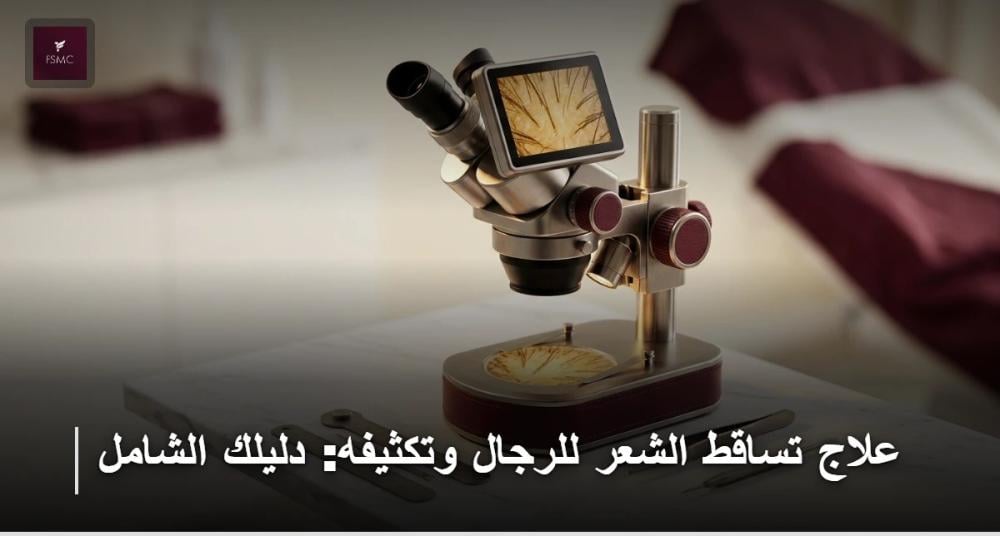
After the initial consultation, the doctor usually examines the scalp using a dermatoscope, a device that magnifies the hair follicles and reveals their condition with high precision. This examination alone is sufficient to differentiate between types of hair loss in most cases.
Then comes the stage of laboratory tests to complete the picture. The usual tests include: complete blood count, ferritin and iron levels, thyroid hormones TSH and T4, male hormones (androgens), vitamin D and zinc. The truth is that a hasty diagnosis — without a sufficient medical history or without tests — often leads to incorrect treatment and a waste of valuable time.
Book now by calling us on 920014198
Solutions for hair loss in women
After a thorough diagnosis, treatment options become clear. There are multiple and varied solutions for hair loss in women, and a doctor may recommend more than one treatment approach simultaneously to achieve the best result.
- Topical minoxidil : One of the most well-studied treatment options for hair loss, it stimulates hair follicles to return to the growth phase. It is used in different concentrations as directed by a doctor.
- Hormone therapy: When a clear hormonal imbalance is discovered, the doctor prescribes androgen regulators or estrogen balancers to treat the root cause.
- Oral medication for treating hair loss in women: such as spironolactone or finasteride in doses specifically for women, and used under strict medical supervision.
- Platelet-rich plasma (PRP) injections : A small blood sample is taken from the patient, processed, and injected into the scalp to stimulate dormant hair follicles.
- Low-level laser therapy (LLLT): It enhances blood flow to the follicles and stimulates their activity without any pain.
- Targeted nutritional supplements: iron, zinc, biotin, and vitamin D, but only after laboratory confirmation of deficiency, as excessive intake may be harmful.
- Modify daily habits: Stop the causes of spoilage such as heat and dyes, and follow a diet rich in protein and leafy green vegetables.
Book now for a free plasma hair treatment + dermapen session
How can hair loss be prevented?
Prevention is always easier than cure, and this isn't just a common saying; it's a fact confirmed daily by dermatologists. Treating hair loss in women becomes less complicated when the underlying causes are addressed before they worsen.
- Avoid tying your hair too tightly for long periods, especially with tight elastic "ties".
- Choose a wide-toothed comb and do not comb your hair when it is completely wet.
- Reduce direct heat (dryers and tongs) to the lowest possible level.
- Make sure you get enough sleep, as chronic sleep deprivation raises cortisol levels, which damages hair follicles.
- See your doctor regularly for early detection of any hormonal imbalance or nutritional deficiency.
- Do not start a strict diet without professional supervision, as rapid weight loss is one of the most common triggers for sudden hair loss.
- Focus on managing stress. Exercise, deep breathing, and yoga are not luxuries, but actual protection for hair.
What is hair transplantation for treating hair loss?
Hair transplantation is a surgical option used when hair follicles in certain areas have completely lost their activity and have not responded to stimulation treatments. The principle is simple: hair follicles are taken from donor areas (usually the back of the head) and transplanted to the affected areas.
The FUE (Follicular Unit Extraction) technique is currently the most common, as it extracts individual follicles without leaving a visible linear scar. In the FUT (Follicular Unit Transplantation) technique, a strip of skin containing follicles is extracted, separated, and implanted. Both techniques require a careful assessment of the density of the donor area and the nature of the hair loss.
Hair transplantation is not suitable for all types of hair loss. For example, autoimmune alopecia areata cannot be cured with transplantation unless the immune system is first controlled. Therefore, a thorough evaluation by a qualified physician remains essential before making any decision.
What are the treatments for hair loss?
Aside from surgical hair transplants, non-surgical medical procedures are now achieving very satisfactory results. Hair loss in women and its treatment increasingly rely on these modern techniques.
- Mesotherapy injections are among the most prominent of these procedures, where cocktails of vitamins, minerals, and amino acids are injected directly into the scalp, nourishing the hair follicles from within. Results appear gradually over several sessions.
- Microneedling is another treatment option for hair loss. It involves creating very precise micro-traumas in the scalp that stimulate collagen production and enhance the absorption of topical treatments. Doctors often combine this technique with PRP (platelet-rich plasma) injections for a more potent effect.
- Treating excessive hair loss with a laser cap or low-level laser devices in the clinic has also become a popular option, and it is completely safe and has no significant side effects.
What are the best clinics in Saudi Arabia for treating hair loss?
The question every woman going through this experience asks herself: Where can I find the right doctor who diagnoses accurately and treats scientifically?
The First Specialist Medical Clinics Complex is a trusted choice in this field, as its dermatology clinic boasts a team of specialists in hair and scalp diseases, equipped with the latest diagnostic and treatment equipment. What distinguishes this complex is its integrated approach; it doesn't treat hair alone, but considers the patient's complete picture: her hormones, nutrition, medical history, and lifestyle.
Choosing the right clinic is just as important as choosing the treatment itself. A good doctor takes the time to understand your condition before prescribing anything, and that's precisely what distinguishes specialized medical clinics from quick fixes.
Frequently asked questions about finding solutions for hair loss in women
When does hair loss in women become a condition that requires a visit to the doctor?
Losing between 50 and 100 hairs a day is considered normal. However, if you notice significant hair buildup on your pillow or while showering, or if you start to see your scalp from the front or center, you should consult a doctor immediately. Delaying diagnosis means the damage to the hair follicles will progress and the chances of responding to treatment will decrease.
Can hair grow back after severe hair loss?
In most cases, yes, especially if the hair follicles are still alive. Treating early-stage hair loss yields far better results than treating it later. Conditions like telogen effluvium have a very high recovery rate after the underlying cause is addressed. However, the scarred follicles in scarring alopecia do not respond to treatment, so early diagnosis remains the most crucial factor.
What role does nutrition play in finding solutions for hair loss in women?
Nutrition is essential, not secondary. Solutions for hair loss in women are incomplete without addressing any laboratory-proven nutritional deficiencies. Hair follicles require sufficient protein (keratin is derived from amino acids), iron, ferritin, zinc, and vitamins D and B12. However, it's important to note that nutrition alone will not suffice if the cause is hormonal or immunological. In such cases, medication for hair loss in women, along with dietary modifications, becomes necessary.
Hair loss is not inevitable, nor is it a problem to be treated with random pharmacy products. Real and effective solutions for hair loss in women are available when based on an accurate diagnosis and a well-thought-out treatment plan. If you are experiencing this problem, the first and most important step is to consult a specialist who understands the complexities of this condition. The First Specialist Medical Clinics Complex offers this level of specialized care through its comprehensive dermatology clinic. Your hair deserves more than just trial and error.